What is robotic surgery?

Robotic surgery is a surgical procedure performed by a surgeon using a robotic platform. In other words, the surgeon controls the movements of robotic arms that are in contact with the patient’s body through a remote console. This is what we call robot-assisted surgery. Robot-assisted surgery offers several advantages for both the patient and the surgeon. The surgeon benefits from greater precision in movements and a three-dimensional view of anatomical structures, as if being immersed inside the patient’s body. For the patient, the incisions are smaller, and because the surgeon can see and dissect with greater accuracy, there is less blood loss, less postoperative pain, and a faster recovery time. The introduction of this robotic system has revolutionized the field of surgery. It is no longer just the future, but the present, showing us a glimpse of the potential of this technology according to the results obtained so far.


Benefits and advantages for the patient

The robotic platform offers several advantages. First, it allows for very small incisions, and the type of movement performed by the robotic arms—introduced into the patient’s body through fine instruments—results in less tissue damage. In addition, the dissection of anatomical structures is more precise, meticulous, and free from the natural tremor of the human hand. This ensures a safer procedure and likely a more effective outcome in any surgical intervention. Another advantage of the robotic system is the ability to perform procedures in very small and confined spaces without the need to enlarge the surgical field. This reduces the risk of postoperative complications that could arise from more extensive dissection. For all these reasons, with the introduction of robotic surgery, an increasing number of surgeons and patients are choosing robotic surgical treatments due to their minimally invasive nature.

Advantages of robot-assisted surgery

Although robot-assisted surgery offers several advantages compared to traditional surgical techniques, it must be performed by expert hands. If the surgeon is not sufficiently trained, complications may arise, as with any other conventional surgical procedure. For this reason, the specialized surgeon must be properly trained and have sufficient experience before performing robotic surgery on the patient.

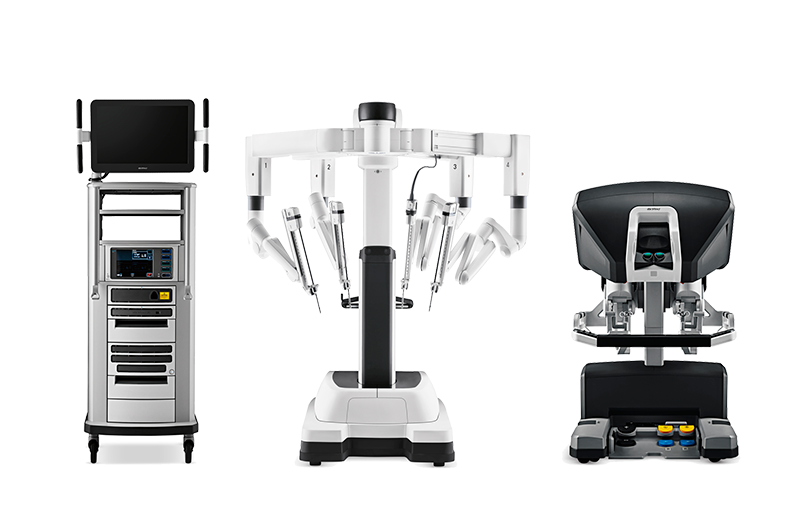
How is the robotic platform composed?

In this case, the Da Vinci robotic system is described, which is composed of three main components:

Our core values are humane patient care and professionalism. to achieve excellence in all pathologies of our specialty.
Close Popup

We use cookies to provide you with the best online experience. By accepting, you agree to the use of cookies in accordance with our cookie policy.

Close Popup
Privacy Settings saved!
Privacy Settings

When you visit any website, it may store or retrieve information on your browser, mostly in the form of cookies. Control your personal cookie services here.

These cookies are necessary for the website to function and cannot be switched off in our systems.

Technical cookies
To use this website, we use the following technically required cookies
  • wordpress_test_cookie
  • wordpress_logged_in_
  • WordPress security

Reject all services
Save
I accept all services
Open Privacy settings